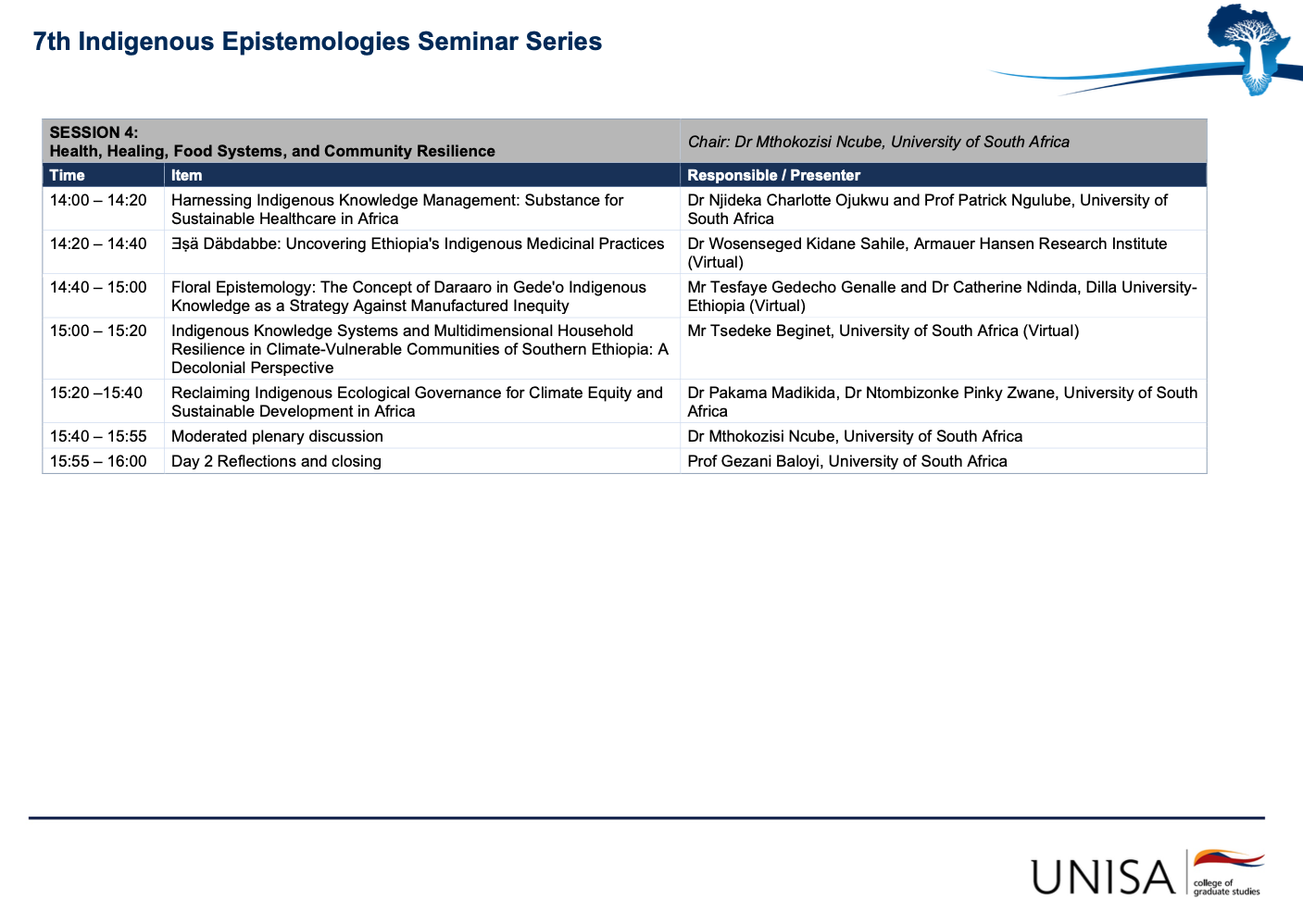
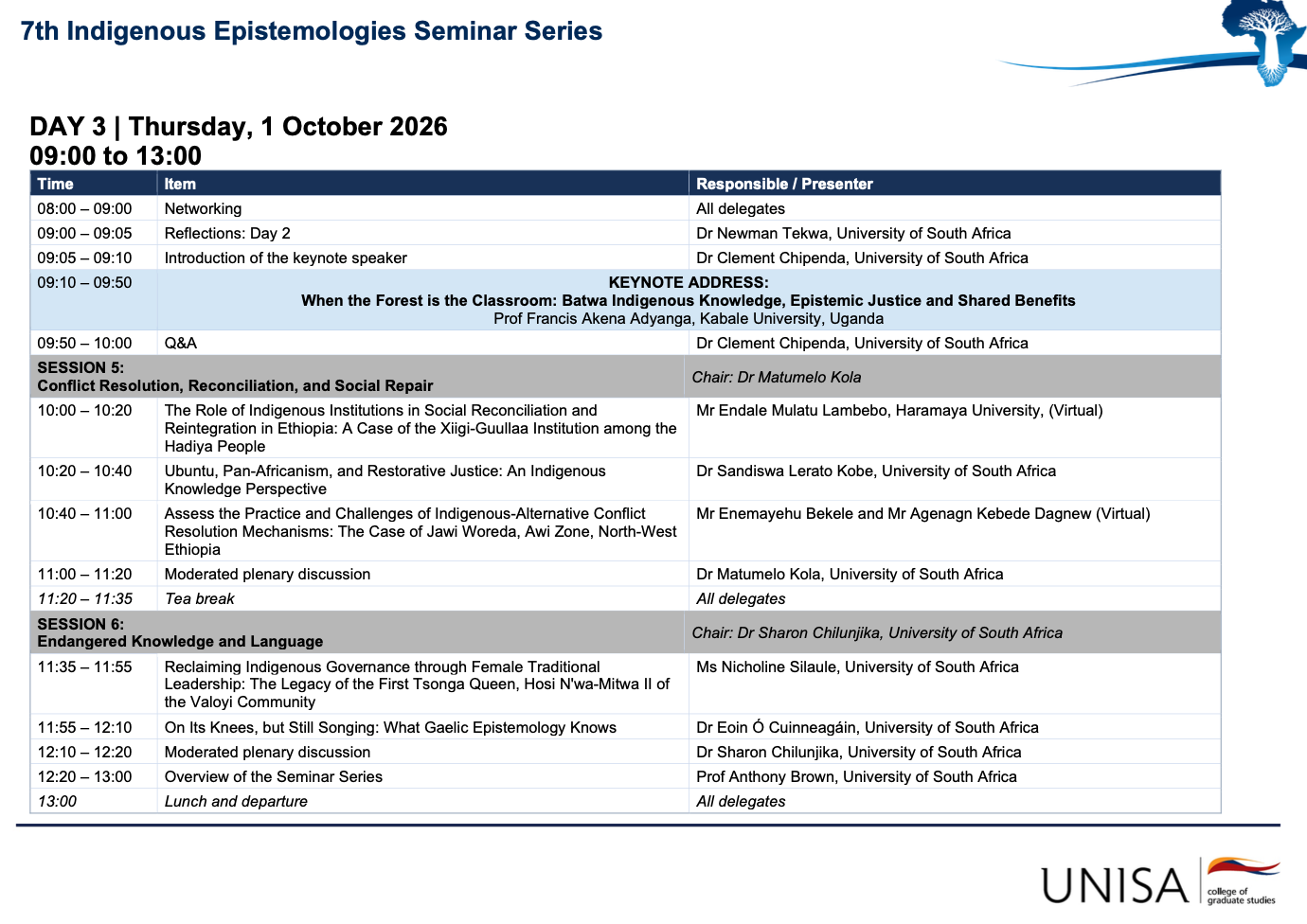
On Its Knees, but Still Songing: What Gaelic Epistemology Knows
Dr Eoin Ó Cuinneagáin
University of South Africa (UNISA)
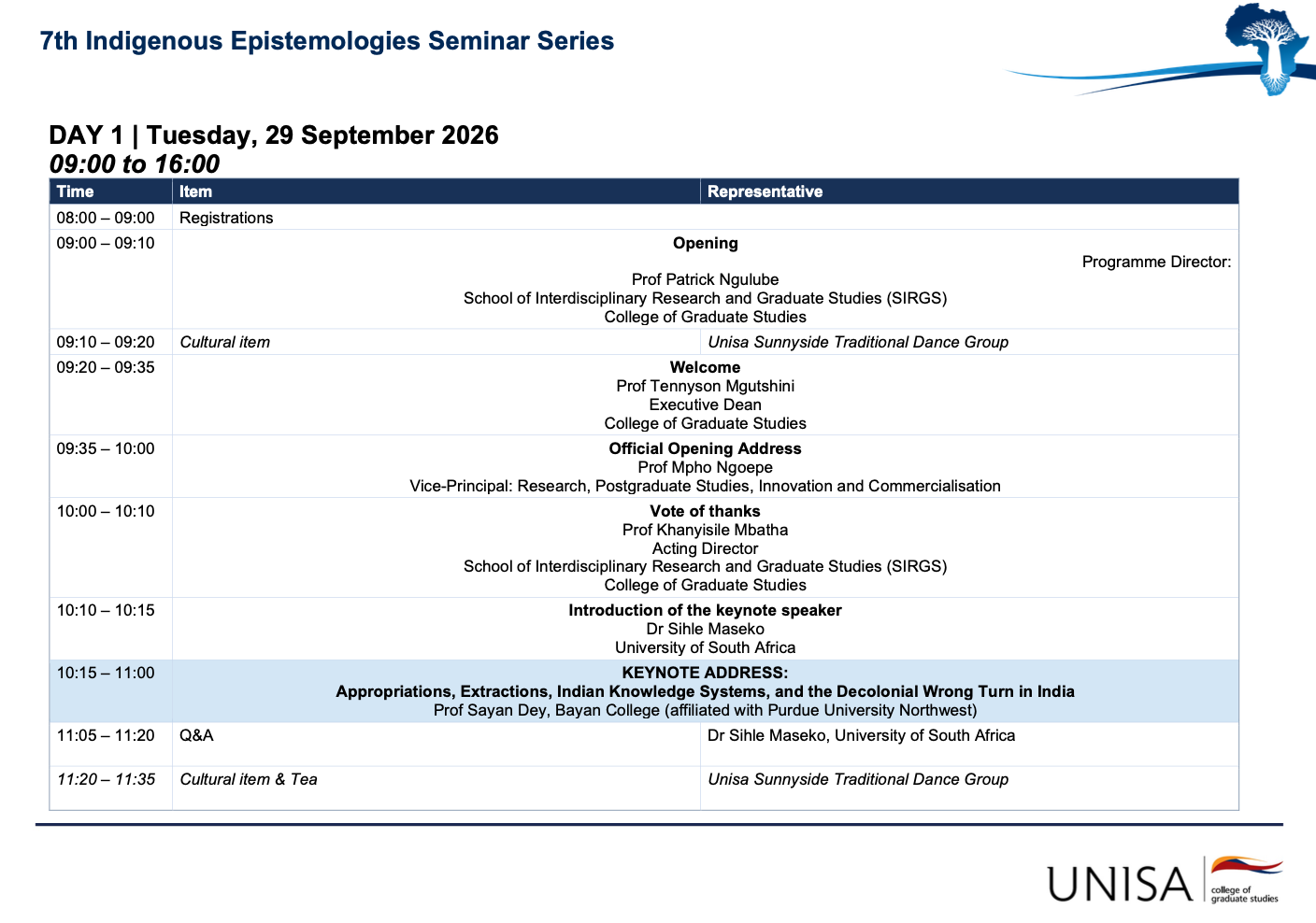
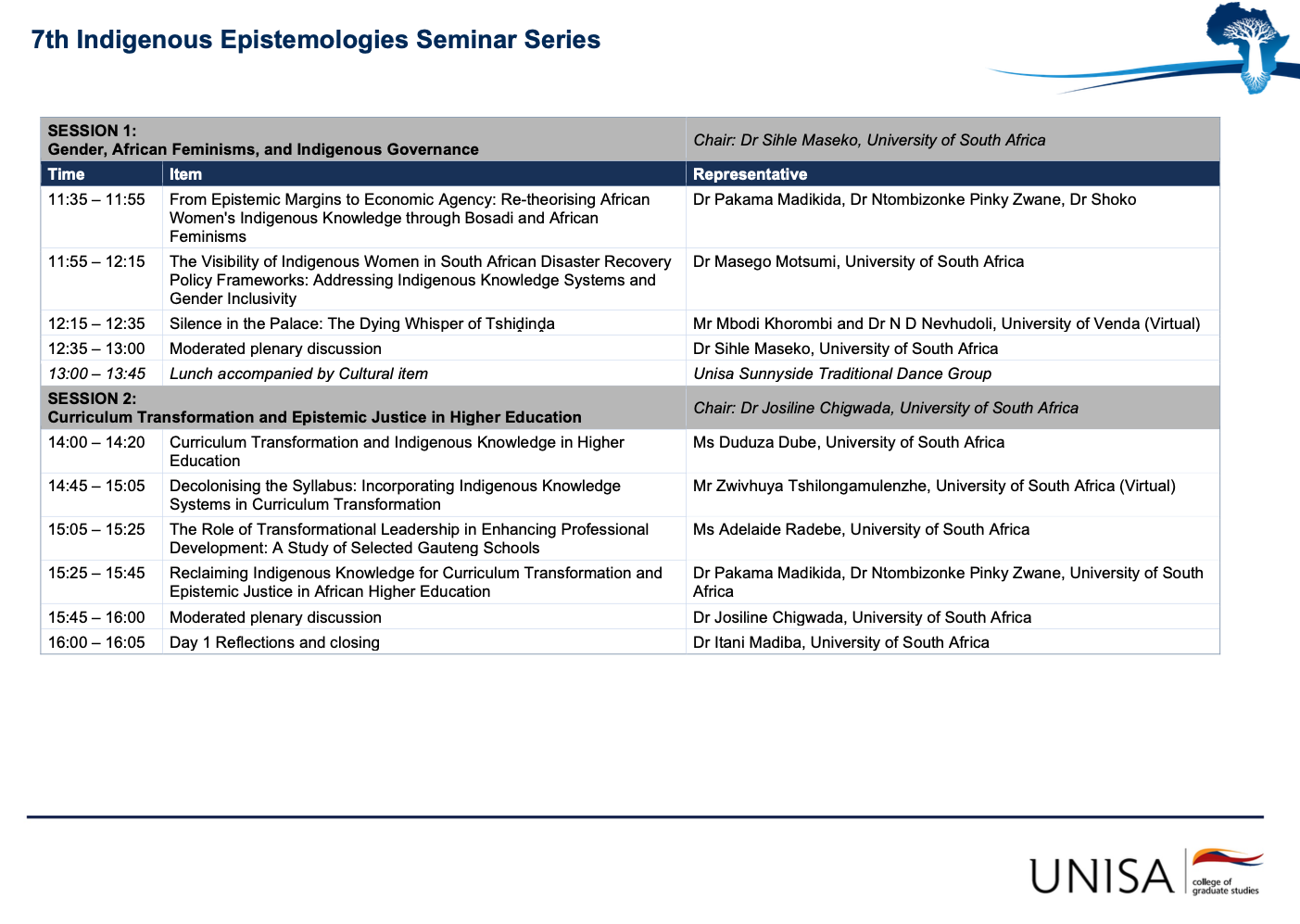
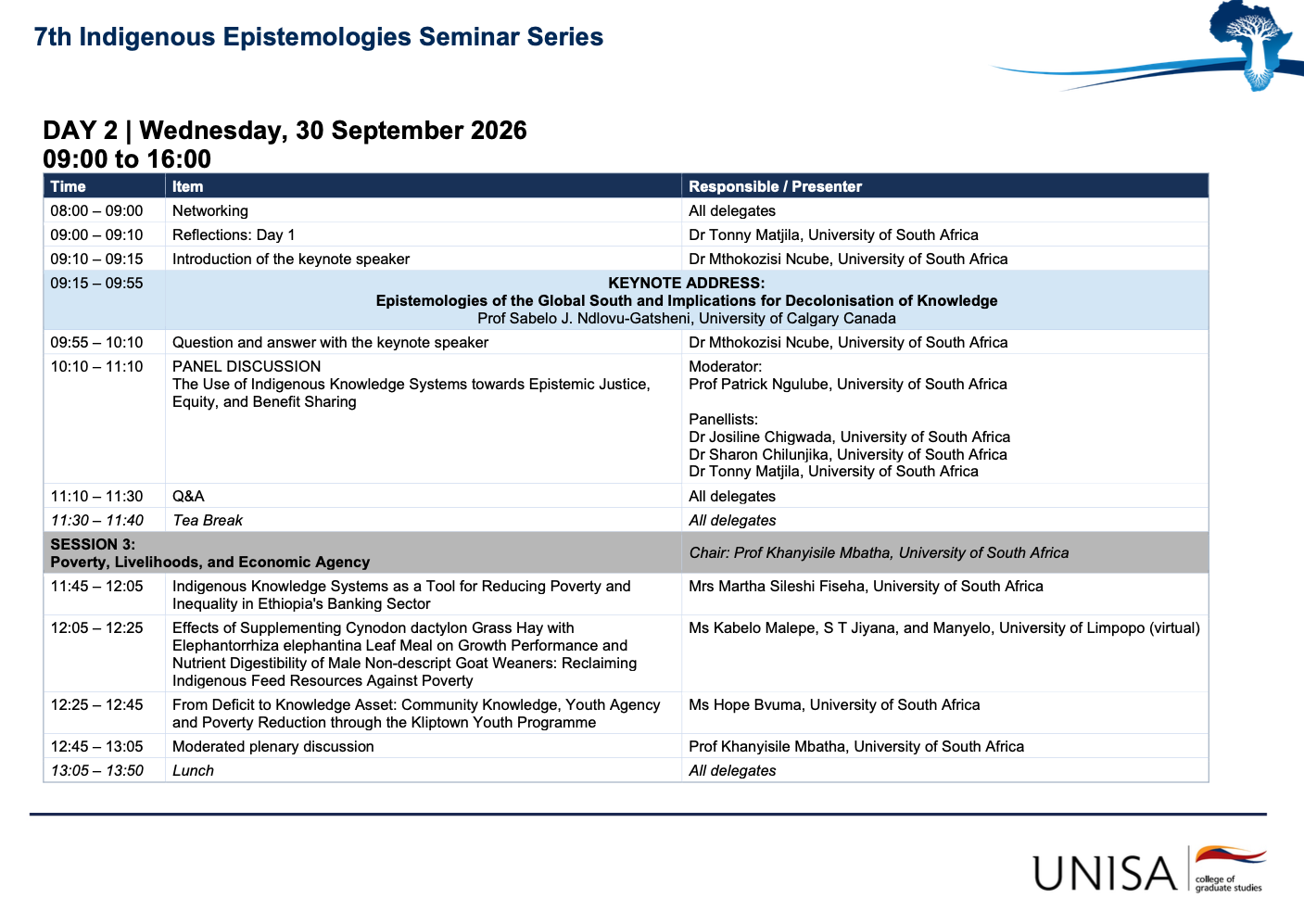
2026 Indigenous Epistemology Seminar
Still in Our Hands: Indigenous Knowledge Systems Against Poverty and Inequality
Date: 1 October 2026
Time: 11:55-12:15
Venue: Function Hall, 4th Floor, Kgorong Building, Muckleneuk Campus, UNISA, Tshwane
What does Gaelic epistemology know that Anglo-modern universities cannot? At the beginning of the nineteenth century, An Ghaeilge was spoken by an estimated three to four million people; today, approximately 72,000 people report speaking it daily. This contraction cannot be understood simply as linguistic decline. It emerges from a longer history of conquest, dispossession, genocide, epistemic violence, and the systematic displacement of Gaelic ways of knowing.
The paper situates this epistemic devastation within two historical conjunctures. The Cromwellian genocides of the seventeenth century resulted in the loss of approximately 40 percent of the Irish population through killing, famine, disease, transportation and displacement, alongside extensive territorial dispossession. Two centuries later, An Drochshaol – the period conventionally rendered in English as the Great Famine – resulted in approximately 1.5 million deaths and mass displacement, constituting the largest genocide in long eighteenth century Europe. Rather than allowing colonial state archives sole authority to determine how these experiences may be named, the paper takes Gaelic oral knowledge seriously as epistemic sources through which these experiences have been understood and transmitted.
Drawing upon oral songs alongside interviews with five of Ireland’s prominent Sean-Nós singers, the paper examines amhránaíocht (Irish-language oral singing) as a living site of epistemic persistence. Songs carrying histories of dispossession, hunger, forced movement, attachment to place, grief, resistance, and communal memory are approached as practices through which indigenous knowledge has survived and travelled intergenerationally.
The Irish experience therefore offers a particular intervention into contemporary discussions of indigenous knowledge systems as they resist colonialism and survive pauperization. The paper ultimately reverses the conventional direction of epistemic recognition. Rather than asking how Gaelic knowledge might be incorporated into the Anglo-modern university, it asks what the university cannot know through its own epistemic instruments. It asks what Gaelic epistemology might teach Anglo-modern institutions that designed and legitimated bringing it to the edge of erasure.